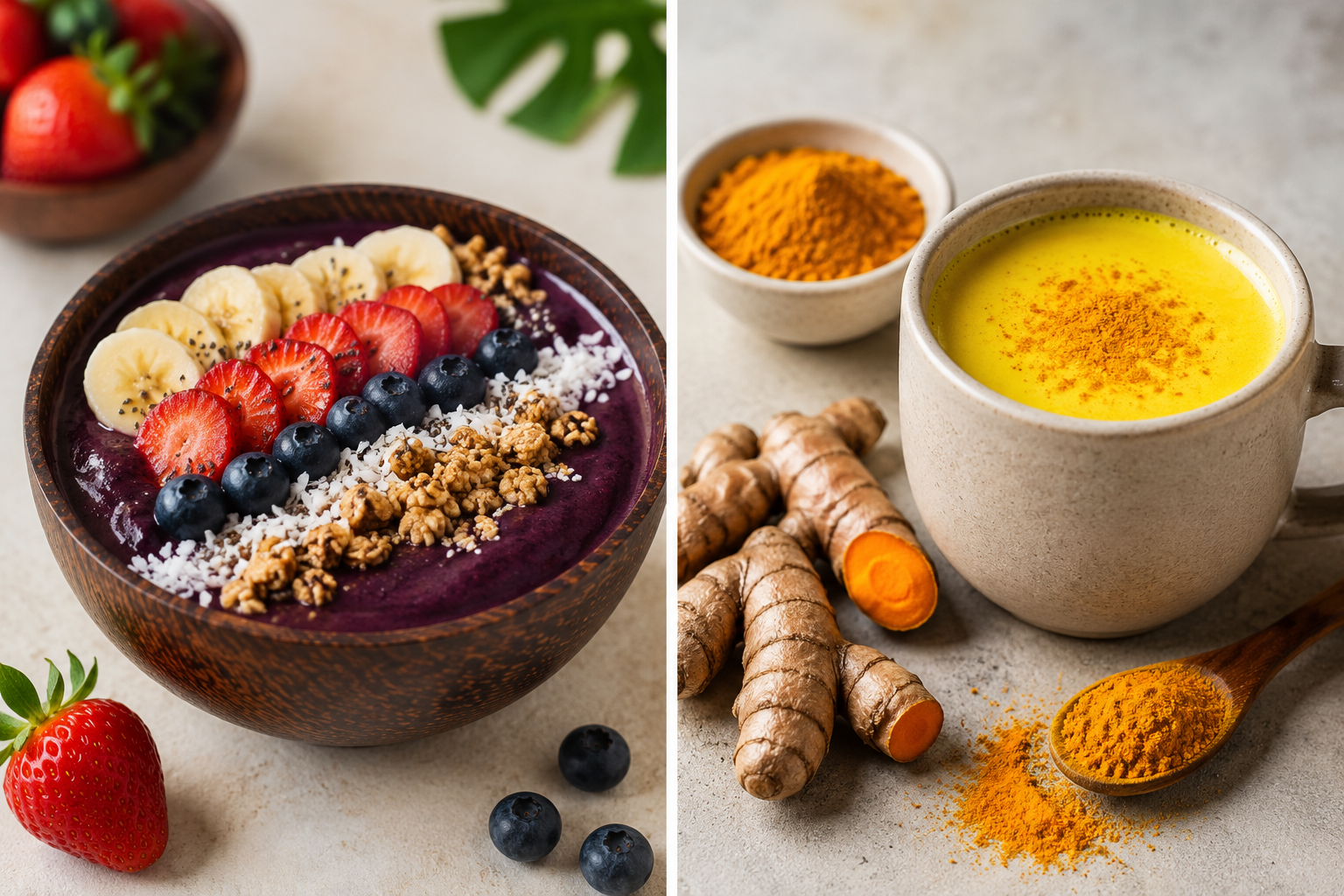
Originally consumed in Brazil’s Amazon region, açaí has long been a staple food in northern Brazil, particularly in Pará, where it is commonly eaten with cassava flour or alongside savoury dishes rather than as a sweet dessert. Internationally, however, the berry became heavily marketed for its antioxidant profile, particularly anthocyanins — the compounds responsible for its deep purple colour.
That vivid colour became central to the product’s commercial appeal. Açaí bowls stood out visually on café menus and social media feeds at a time when highly stylised food presentation was becoming increasingly tied to wellness branding and online food culture.
The ingredient’s flexibility broadened its commercial reach. Açaí moved easily between breakfast menus, post-workout meals, snack foods and dessert-style offerings while maintaining a health-oriented image. In Australia, the category expanded rapidly through beachside cafés, fitness-oriented food retailers and health-focused hospitality brands.
Oakberry, one of the world’s largest açaí chains, launched in Australia at Bondi Beach in 2018 and had grown to roughly 50 local stores by late 2024. The Australian Financial Review described the sector as part of a “$750 million açaí boom” in Australia.
Turmeric followed a different commercial trajectory.
For centuries, turmeric had been deeply embedded in South Asian cooking, Ayurvedic traditions and household remedies. In Ayurveda — the traditional Indian system of medicine with a history spanning thousands of years — turmeric was associated with immunity, inflammation management and overall wellbeing long before Western wellness markets adopted it.
In India, turmeric milk — commonly known as haldi doodh — had long been consumed as a traditional home remedy before wellness cafés and Australian brands including Golden Grind reintroduced similar turmeric-based drinks and “golden milk” products to Western consumers during the wellness boom of the 2010s.
During that period, turmeric gained stronger traction in Western consumer markets through supplements and functional-health products. Much of that positioning centred on curcumin, turmeric’s primary active compound, which researchers have studied for anti-inflammatory and antioxidant properties.
Major supplement brands such as Swisse Wellness and Blackmores also expanded turmeric and curcumin products as demand for plant-based wellness supplements increased. According to Frontiers in Sustainable Food Systems, turmeric supplement sales in the United States increased from US$25.6 million in 2013 to US$151.7 million in 2021.
Turmeric’s earthy and slightly bitter flavour limited its mainstream appeal, keeping the category more concentrated in supplements, functional beverages and wellness cafés, where milk, ginger, cinnamon and sweeteners were often added to soften the taste.
The commercial success of matcha, açaí and turmeric suggests that some of the most influential global food trends are increasingly being built around hero ingredients — products carrying cultural roots, wellness positioning and strong consumer recognition across multiple markets.
The question now is: what will be the next “super ingredient” to capture mainstream consumer attention?