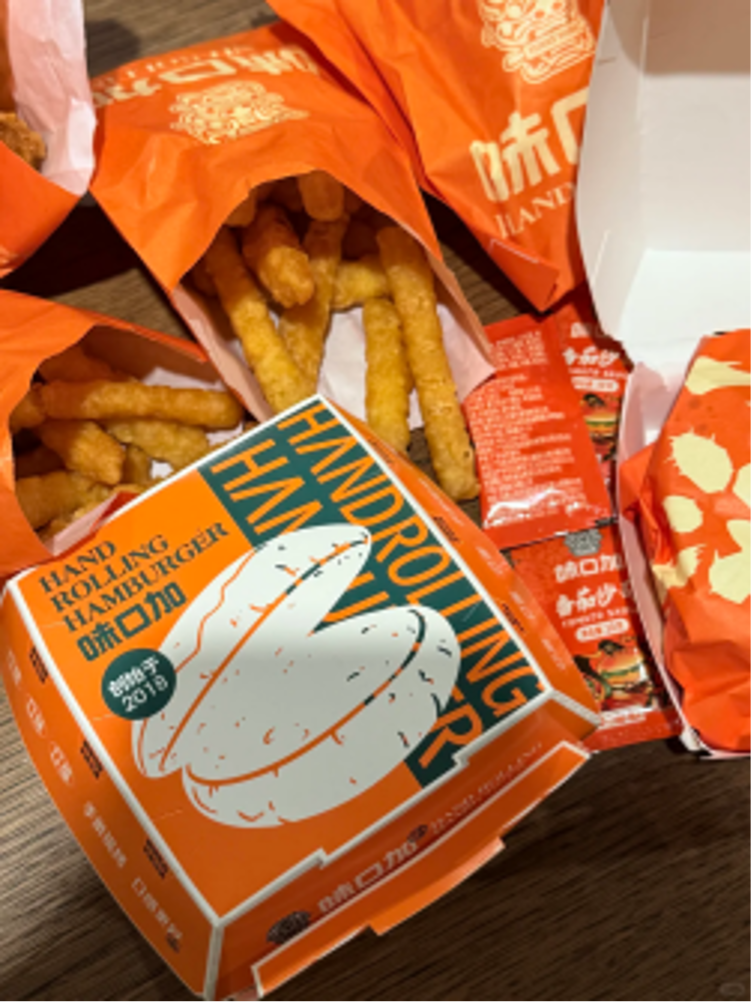
Specialising in Chinese-style burgers (中式汉堡)— made with hand-rolled buns and Chinese-inspired flavours — the Chongqing-founded chain entered Australia in 2024 and has since expanded across Melbourne and Sydney.
Its new Waterloo store, opened in mid July in Sydney’s inner south, joins three existing Melbourne locations across the CBD and Hawthorn. LaunchStory can reveal that two more stores — one in Brisbane and another in Sydney — are set to open by September, taking Weikoujia’s Australian network to six.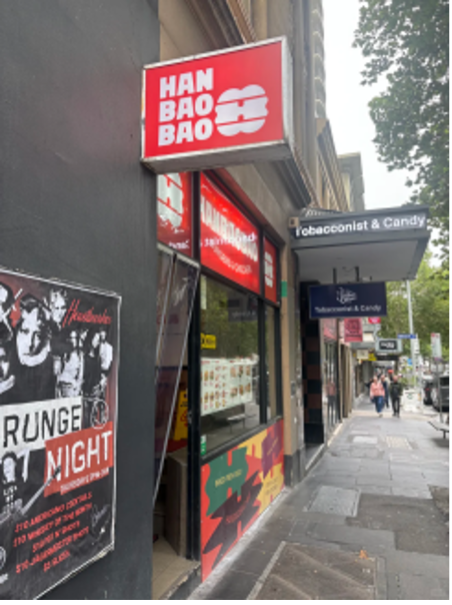
(Source: Rednote @墨尔本炒年糕)
There is one twist to its Australian rollout: the Weikoujia name is largely absent from local storefronts. While Weikoujia counts these stores as part of its overseas franchise network, they trade locally under different consumer-facing names — Hanbaobao in Melbourne and ibaobao in Sydney. The company says its headquarters supports overseas franchisees with site selection, training, supply chain and operations.
Founded in Chongqing in southwestern China in 2018, Weikoujia has grown to more than 200 stores across China and 26 overseas outlets in 12 countries, including Cambodia, Kenya and Papua New Guinea. Its international footprint has so far largely centred on developing markets, making Australia one of Weikoujia’s first major tests in a developed Western market.
The expansion also comes as a new wave of Chinese food brands looks overseas, moving beyond the now-familiar success of bubble tea and hotpot into new fast-food categories.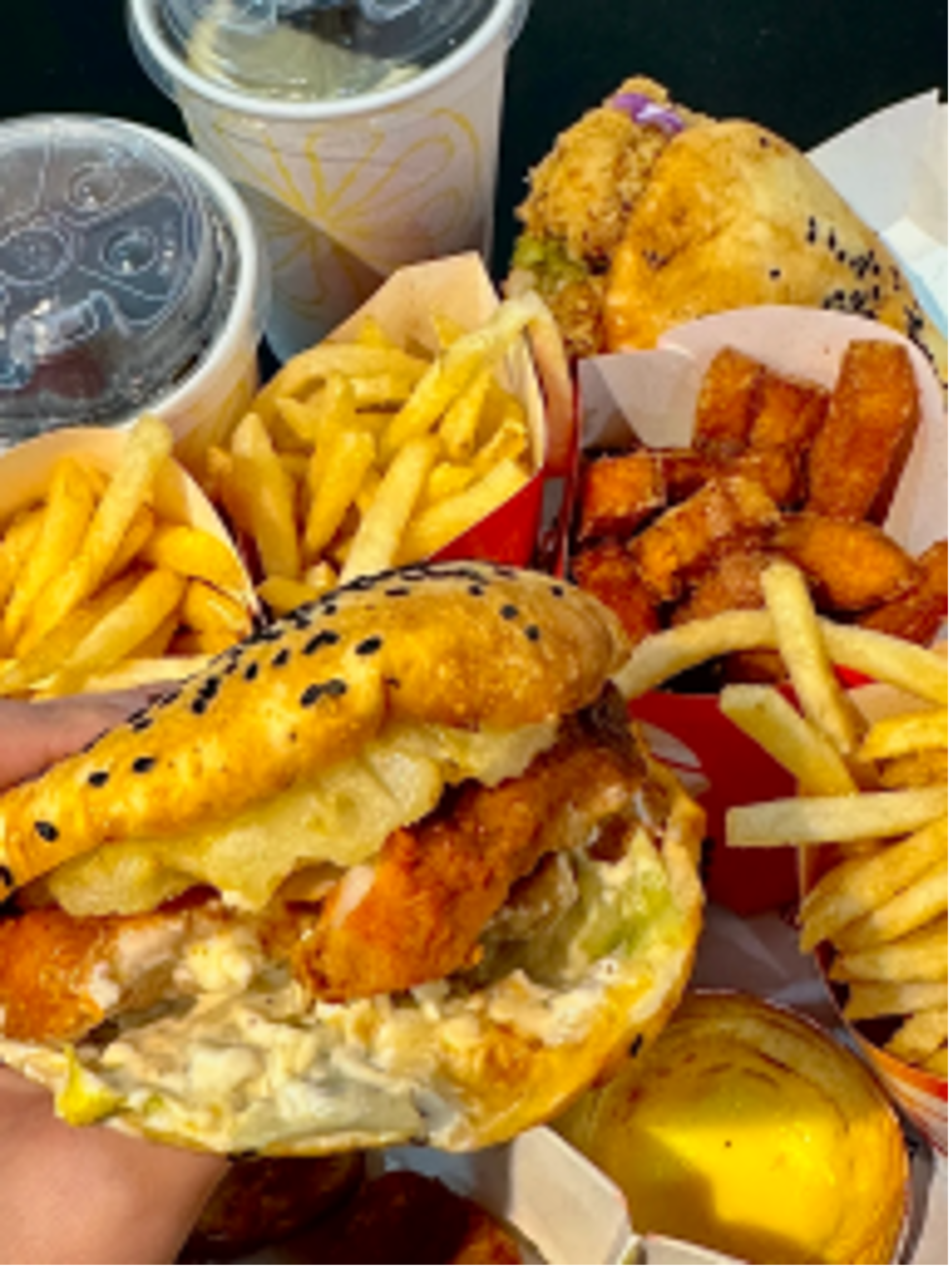
(Source: Rednote @佐沐沐木)
So what makes it a “Chinese” burger? The biggest difference is the bun. Weikoujia’s signature buns are hand-rolled following a 48-hour cold fermentation and baked fresh at 238°C, producing a chewy, slightly crisp texture closer to Chinese flatbread than a conventional burger bun.
The menu brings Chinese flavours into the familiar fast-food format, with offerings such as the Hotpot Fried Chicken Burger, Old Beijing Chicken Wrap and Plum Sweet Potato Fries. In Australia, spice and sweetness levels have also been adjusted for local tastes.
The Chinese burger category was pioneered by Tastien, founded in 2012. By November 2025, the chain had grown to more than 11,000 stores across China, helping turn the concept into a mainstream fast-food category and inspiring a wave of competitors. As competition intensifies at home, brands such as Weikoujia are now taking the concept abroad.
In Australia, Weikoujia has focused on high-density, multicultural areas with large international student populations, positioning its stores to appeal both to Chinese-Australian consumers already familiar with the category and local diners looking for something new.
The timing may also be in its favour. According to Expert Market Research, Australia’s fast-food market was valued at A$37.95 billion in 2025 and is forecast to reach A$49.06 billion by 2035. The burger and sandwich segment is expected to grow at 3.10 per cent annually, ahead of the broader market’s 2.60 per cent growth rate.
Weikoujia is also borrowing from China’s fast-food marketing playbook. Its “Crazy Wednesday” opening promotion, offering free spicy chicken burgers to the first 100 customers, takes inspiration from KFC China’s viral “Crazy Thursday” campaign.
(Cover image source: Rednote @三哥哥)