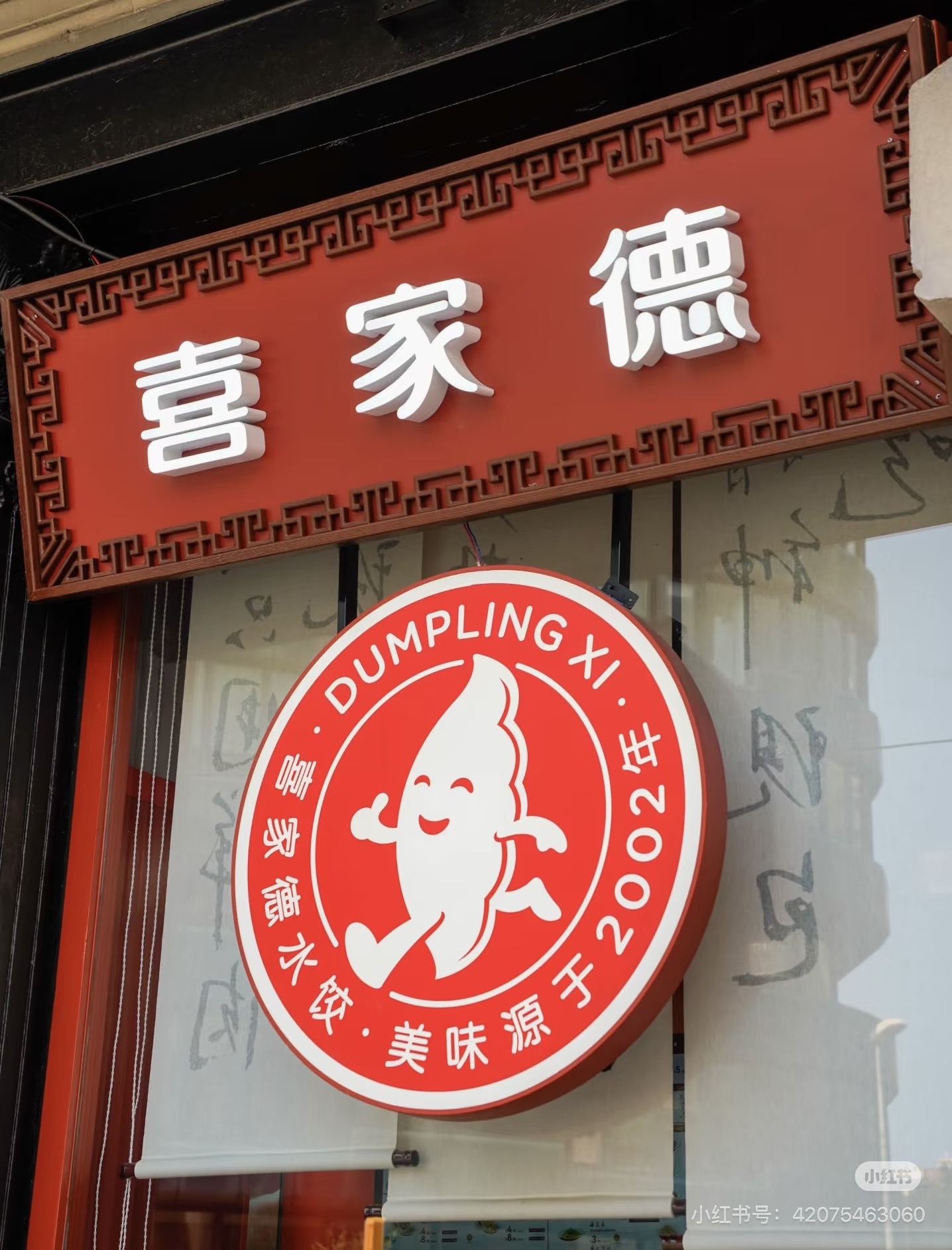
Founded in 2002 in Heilongjiang, northeastern China, Xijiade has grown to more than 800 directly operated stores across the country. Its signature offering is the northern Chinese-style "nine-centimetre straight-cut dumpling", designed to ensure every bite reaches the filling and handcrafted fresh on-site each day.
The Australian debut was first announced on 27 April through the brand’s official overseas franchise account on Chinese social media platform RedNote. In Australia, however, the brand appears to be operating under the English name "Dumpling Xi" rather than "Xijiade".
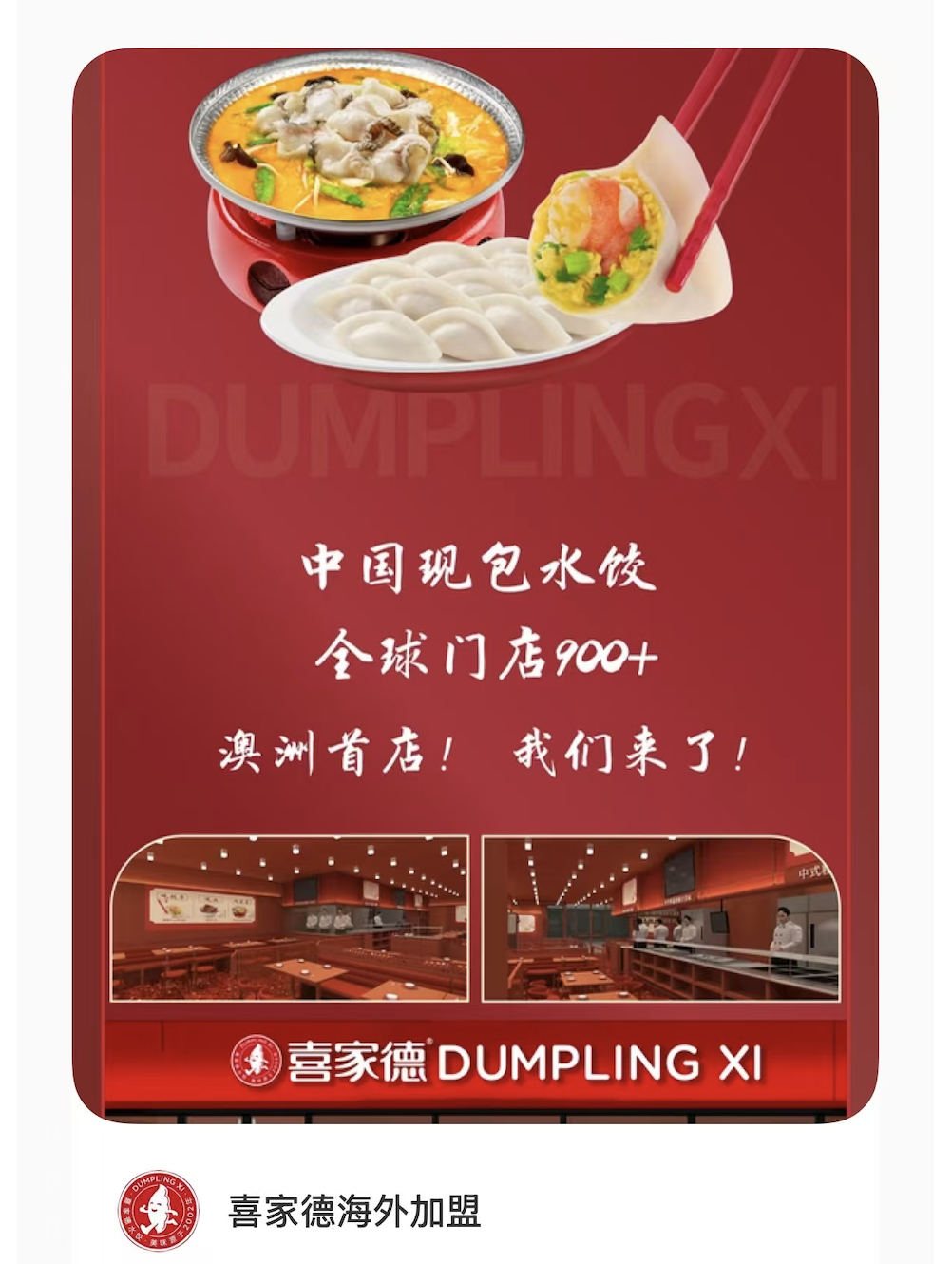
(Source: Xijiade Rednote account)
Meanwhile, frozen dumplings and braised food products bearing the name "Xijiade" are being marketed in Australia by Yunhui Australia Pty Ltd. The products use the same Chinese brand name and feature similar logo and typography styling. Xijiade's official RedNote account has clarified that the exisiting local dumping business is not an authorised Xijiade outlet. Complicating matters further, the name "Dumpling Xi" is also in use in Australia by a Gold Coast restaurant.
A coordinated global push
The Sydney announcement came alongside confirmed openings in San Francisco in June and London in July, with Tokyo and additional cities expected to follow. Since March, Xijiade has used its RedNote account to build momentum ahead of its international expansion, posting updates on upcoming openings and seeking feedback from overseas Chinese communities on preferred cities, locations and menu offerings.
While promoting its products' inclusion at World Economic Forum-related dinner events in Davos for eight consecutive years, the company has also launched a Global Partner Program, offering training and operational support across areas including supply chain management, store operations and business development as it pursues further international expansion.
The Promise and Challenge of Handmade Dumplings
Rather than competing in the frozen food segment, Xijiade, trading as Dumpling Xi in Australia, is positioning itself around a fresh-preparation model that seeks to replicate the texture and immediacy of a traditional northern Chinese dumpling house. The approach is likely to appeal to Chinese migrants, families and international students seeking familiar flavours and dining experiences. For many within Australia's Chinese communities, the brand's arrival also brings greater access to a distinctive northern Chinese culinary tradition.
Australia's frozen dumpling market has expanded significantly in recent years, driven by restaurant influence, mainstream supermarket distribution and changing consumer demographics. Some Chinese restaurants have also developed a hybrid model, making dumplings fresh on-site for diners while selling frozen versions for takeaway and retail customers. Examples include Sydney-based businesses such as Pure Dumplings and Taste of Shanghai, which offer both dine-in and frozen product options.
In 2025, Chinese frozen food manufacturer Synear expanded its investment in Australia by strengthening local production, using Australian-sourced ingredients and shorter supply chains to improve freshness, efficiency and supply reliability.
Xijiade's handmade-to-order model is both its core differentiator and one of its biggest operational challenges. Labour costs in Australia are significantly higher than in China, and maintaining its fresh-preparation standards will require careful management of pricing and staffing.
At the same time, Chinese consumer scrutiny of "fresh-made" claims has intensified. In September 2025, Chinese entrepreneur KOL Luo Yonghao publicly criticised restaurant group Xibei over its food preparation practices, sparking wider discussions about authenticity and transparency in the dining sector.